
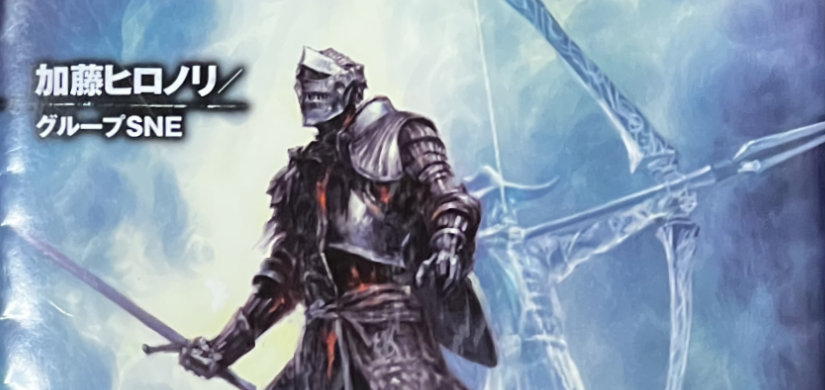
We’ll begin our deep dive into the Dark Souls TRPG by looking at the player-focused first half of the book. Part two will cover the game master focused latter half. Designed by Hironori Katou and
published by Group SNE, Dark Souls TRPG is a book that has been sitting in my blog backlog since it was published. It’s a crunchy, class and level based system that seeks to evoke the feeling Dark Souls III, while also avoiding what would be tedious in an analog game. As with many Japanese TRPGs, it only uses six sided dice. Continue reading Dark Souls TRPG Deep Dive
Category: Games
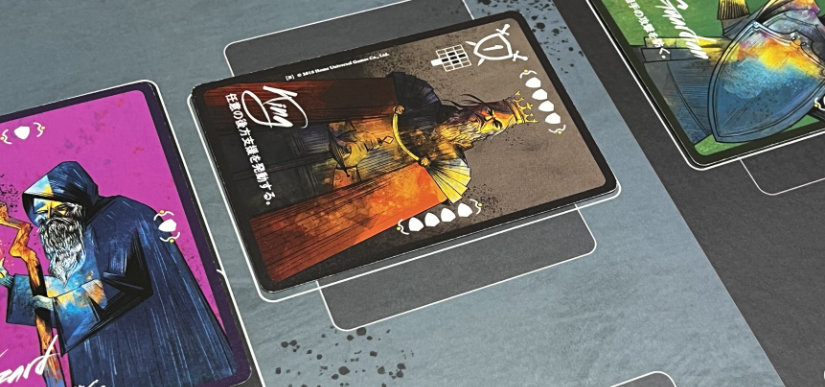
Invictus: the King
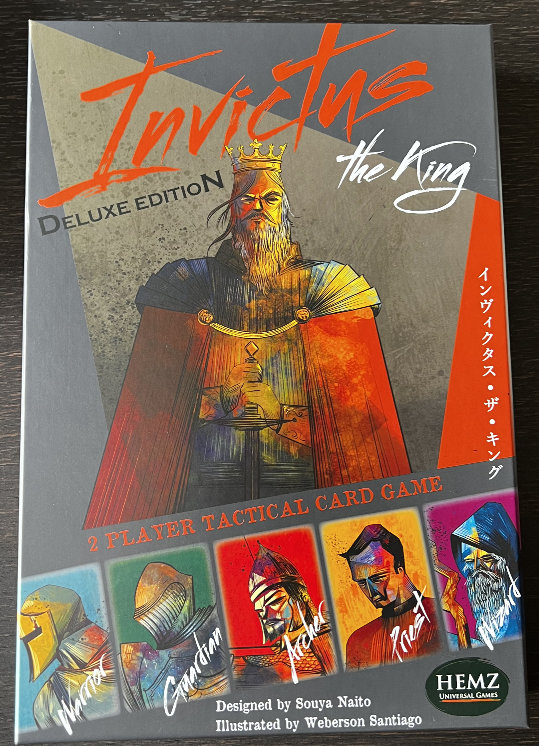
After trying out NoviNovi TRPG: The Horror, I next played a few games of Invictus: the King, a two player tactical card game. I originally picked this up at Tokyo Game Market 2019 because I loved the art, but it was also fun to play. Gameplay is symmetrical, with both players building their deck from the same set of cards.
What’s in the Box
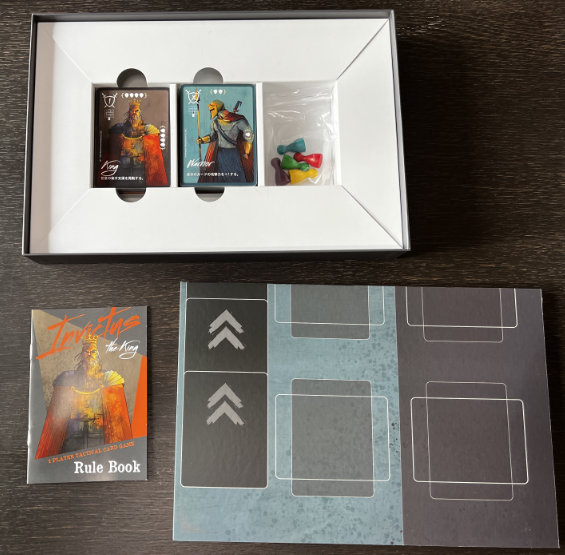
The are multiple themed editions, such as Japan and Egypt, but I have the original Medieval deluxe edition. The difference between the deluxe edition and others is the inclusion of a board and wooden tokens. Contained within is a folding game board; five types of soldiers with twenty cards each; 5 king cards; 5 wooden pieces (one for each unit color); and the rulebook. Continue reading Invictus: the King
Hands on Novi Novi TRPG: The Horror
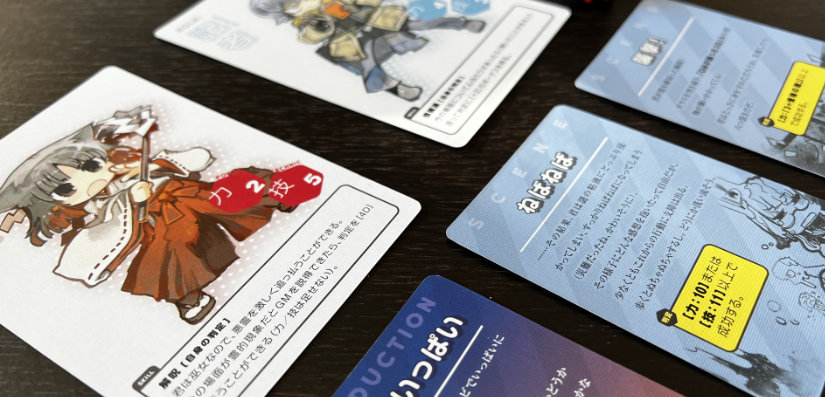
Over the holidays I finally had a chance to play Novi Novi TRPG: The Horror. I had high expectations for it being an accessible TRPG to play with my wife, but it didn’t quite work as well as I had hoped. It’s a good game, it just wasn’t a good fit for us.
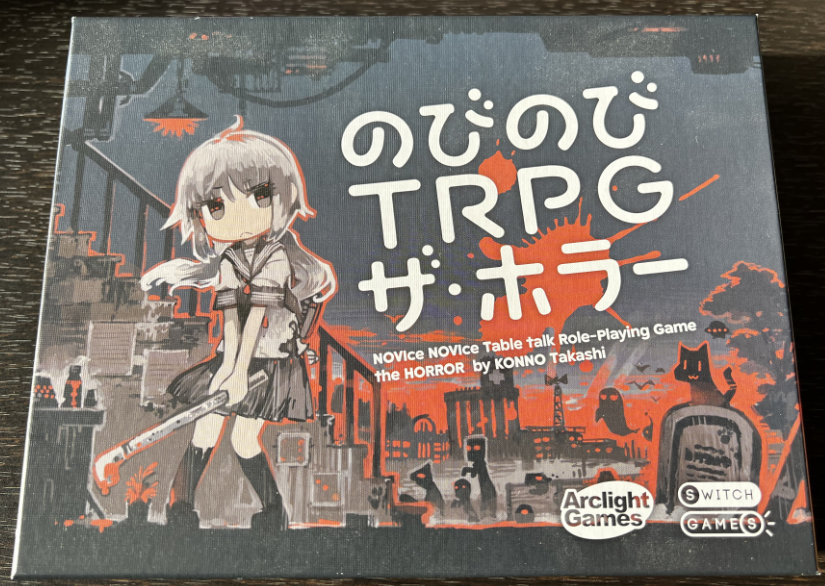
For background, my wife’s experience with TRPGs is playing a game of Magicalogia and seeing me play games of D&D and FFG Star Wars. We’ve watched a number of zombie shows and movies together, so I thought the horror theme would be a better hook than fantasy. To my surprise, she was more engaged with Magicalogia, Continue reading Hands on Novi Novi TRPG: The Horror
Sugoroku in the Wild
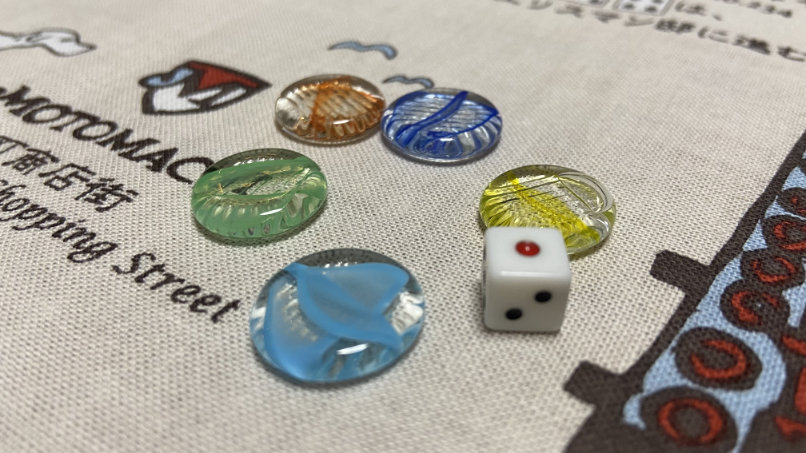
After learning about sugoroku, I’ve started noticing it in various places. The first was a reproduction of a 1902 game in a gift shop in Otaru. Next was at a museum gift shop in Yokohama, and again at a park gift shop. Most recently was the Edo-Tokyo Museum having several exhibits. Hunting for sugoroku has turned into a hobby of mine!
Guide to Otaru
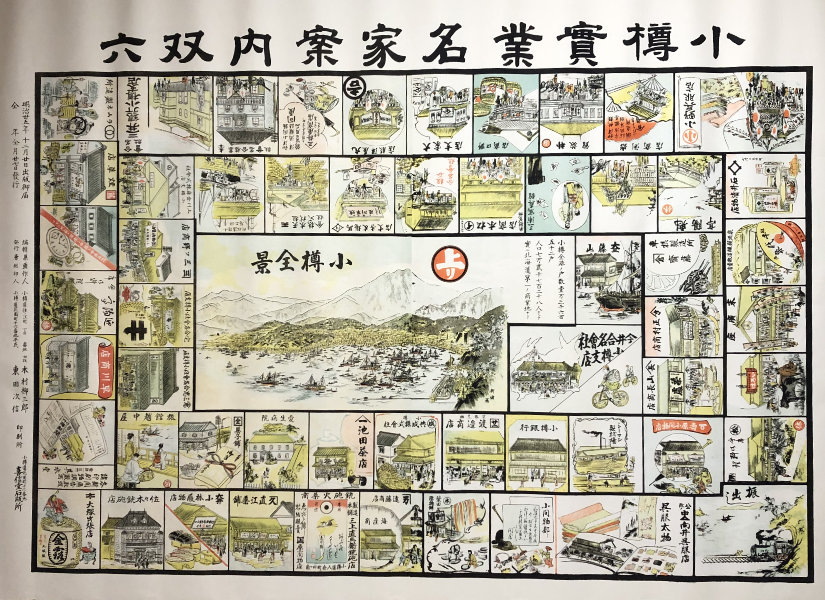
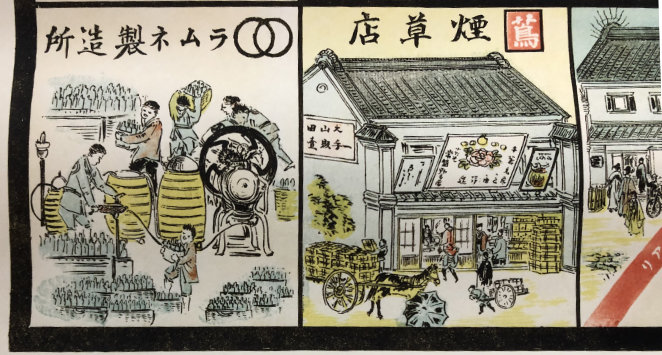
Otaru is a small town in Northern Hokkaido that once had a bustling financial district. This reproduction of a 1902 (Meiji 35) game Continue reading Sugoroku in the Wild
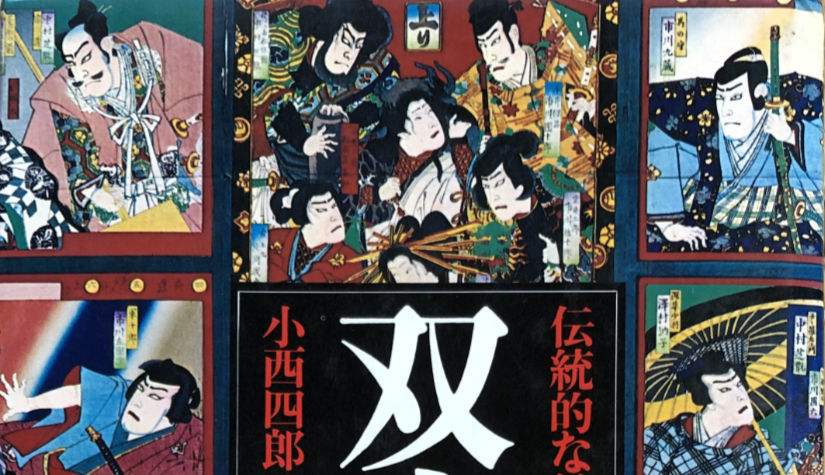
Sugoroku – Traditional Board Games
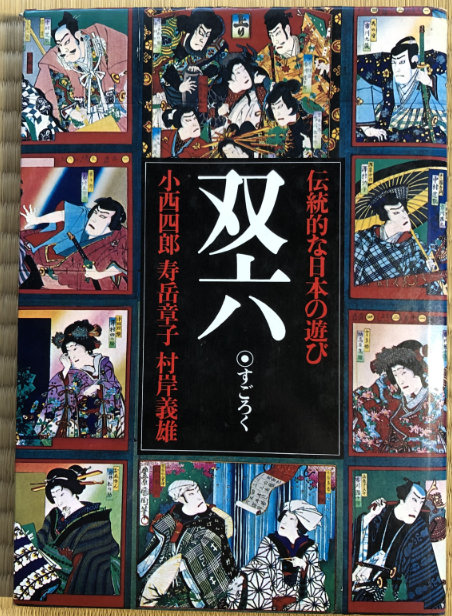
Today we’ll take a look at sugoroku, which refers to two types of traditional Japanese board games: board sugoroku (盤双六) and art sugoroku (絵双六). The latter, though, is is what people think of when they think of sugoroku. My wife discovered a book simply titled Sugoroku: Traditional Japanese Games at a local used bookstore and kindly picked it up for me. Published in 1974 and full of lavish photos of historic games, the first half looks at the types and art of sugoroku, while the latter half explores the history. As a bonus, a famous places sugoroku was tucked away in the sleeve.
I enjoyed flipping through the book just for its pictures alone, but the essays by its three authors deepened my interest. The following is a summary and highlights of what I learned from the book. Continue reading Sugoroku – Traditional Board Games
Role & Roll TRPG Catalog
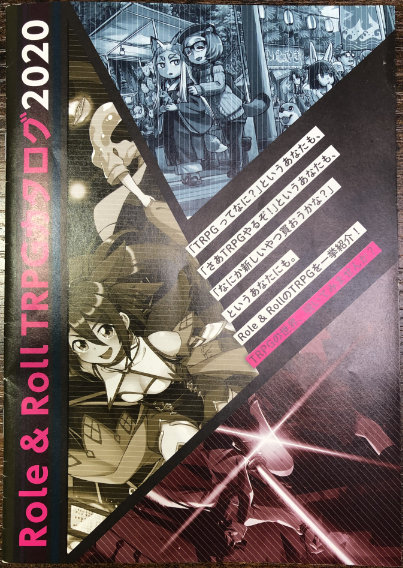
Today we’ll take a look at a Role & Roll TRPG catalog from 2020. A catalog? From last year? While it may sound dull on the surface, I find it interesting how a publisher classifies and presents their games.
Role & Roll is one of the major TRPG publishers in Japan, and is part of ArcLight, a major analog game company that runs Game Market. In addition to the magazine of the same name, Role & Roll publishes a variety of TRPG related books. The Role & Roll game shop in Akihabara is their physical storefront. Continue reading Role & Roll TRPG Catalog
TRPG Book Sizes
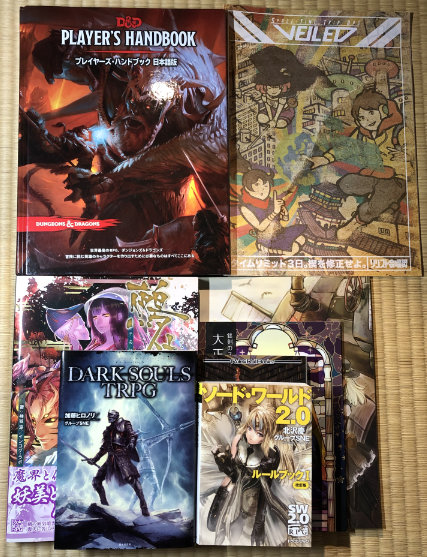
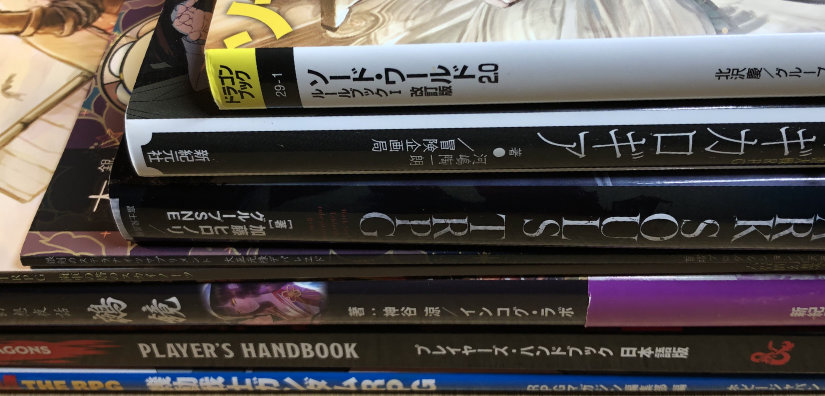
The most common size for American TRPGs is 8.5″x11″, but that size is rare in Japan. In fact, it’s only really used for translated editions of western games. Instead, a variety of smaller paperback sizes are the norm here. So being a bit of a bibliophile, I thought it’d be interesting to take a look at the formats and pricing of TRPGs in Japan. Continue reading TRPG Book Sizes
Giant Robots and Relationships
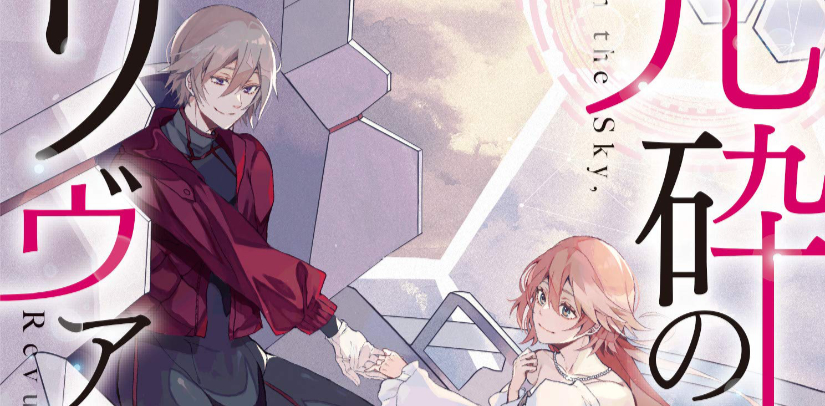
A new TRPG Kousai-no-Revulture (光砕のリヴァルチャー) was just published and immediately caught my eye. Created by the same group as Silver Sword Stellar Knights (銀剣のステラナイツ), it’s a game of giant robots and relationships! One of the unique things about this game is that it’s a two player TRPG. Not just playable with two people, but the mechanics themselves are built around the relationship of the Chevalier (pilot of the Revulture robot) and their Fiancee (the navigator and game master).
Sanity in the Taisho Era
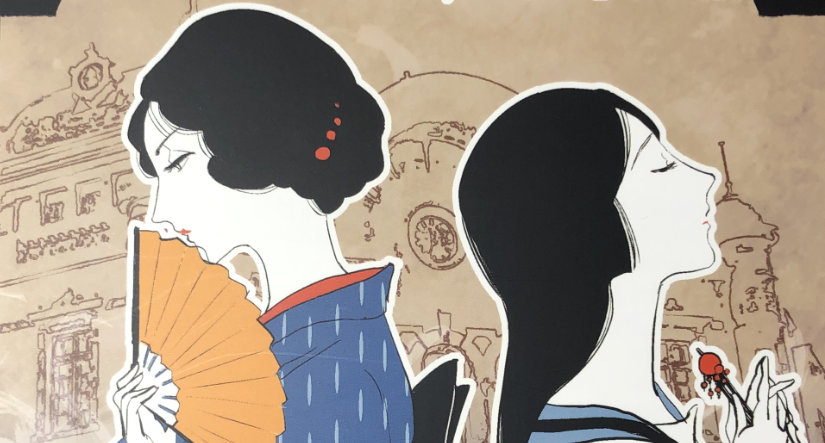
Being one of the most popular TRPGs in Japan, Call of Cthulhu has a plethora of official and unofficial supplements. Given its popularity, it’s about time we take a look at one of them. Entitled Our Lady of Kanzashi (かんざしの聖母【マリア】) it is a scenario book for Call of Cthulhu.
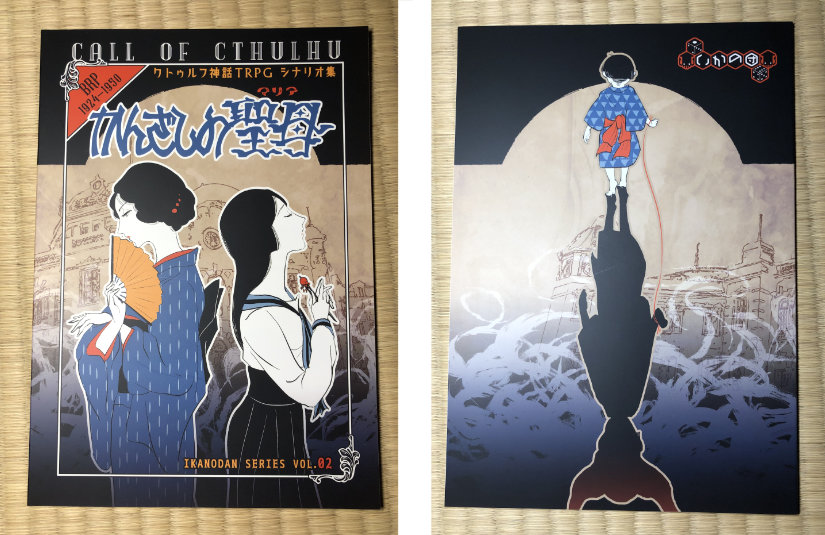
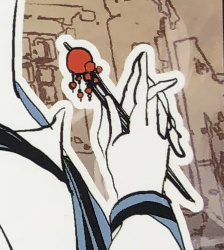 Containing three scenarios ranging between 1924 and 1950, its cover channels the Taisho and early Showa era aesthetic. Kanzashi, which the girl on the right is holding and involves the third scenario, is an ornate hairpin that comes in a variety of styles.
We’ll take a brief detour and discuss the aesthetic of the cover and the period it references. The first scenario takes place in 1924, two years before the end of Taisho, and the last scenario in 1928, two years after the end. Continue reading Sanity in the Taisho Era
RPG Dragon Magazine
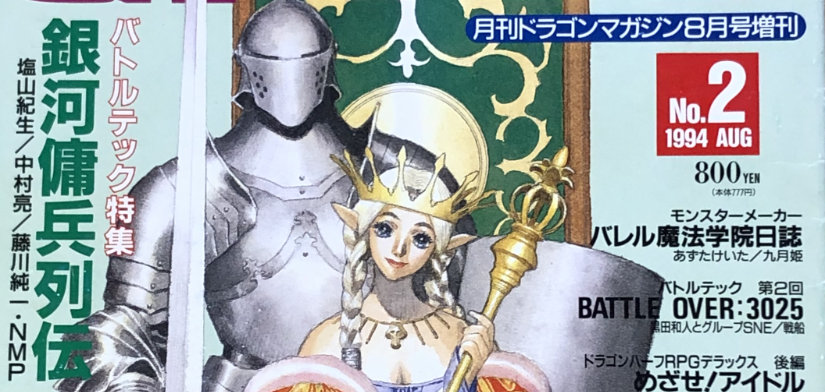
Following the look at Warlock magazine, we’ll go back to August 1994 and take a look at volume 2 of RPG Dragon (RPGドラゴン). Released as a bimonthly supplementary magazine to the monthly Dragon Magazine (ドラゴンマガジン), it sold for 800 yen at the time. I ordered it from Suruga-ya along with another magazine with a supplement about Magicalogia. Based on the insert advertising RPG Dragon, the main magazine sold for 600 Yen.
What caught my eye, was the list of games it focused on: Sword World, Battletech and Mechwarrior, Shadowrun, Monster Maker, Dragon Half, and Paradise Fleet, among others.
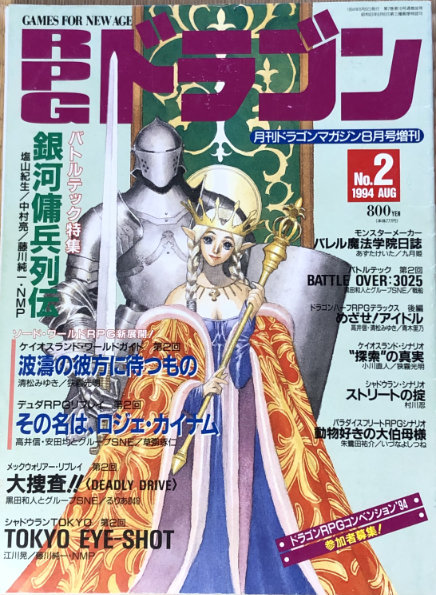
The page direction follows the traditional style of right to left, while modern game magazines are usually left to right. There’s a lot of content, and the order of it tends to be mixed, so rather than showcase in page order, I’ll list it by category. Continue reading RPG Dragon Magazine